

Ten Years of AHLU
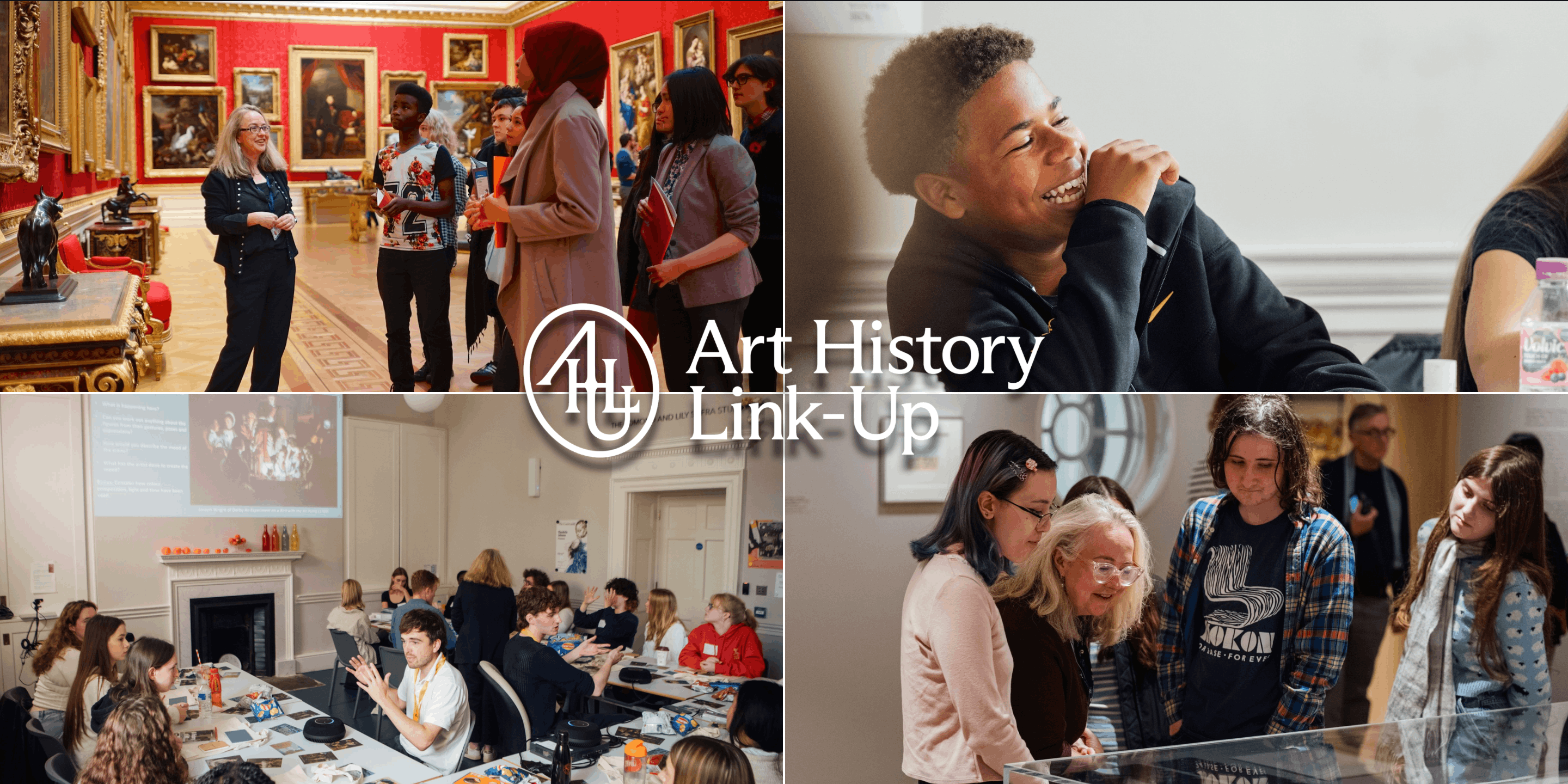
Ten years ago this summer, we were recruiting students for AHLU’s very first course, ‘Art History for Everyone’ - a free fast-track Art History AS Level for state students, based in teaching space at the Wallace Collection given free of charge. The idea grew out of pilots I’d run for the Association for Art History, and years of teaching Art History in state schools. However, it was almost impossible to take these students to museums and galleries to see the works we were studying first hand, because of timetabling and safeguarding restrictions.
And so the obvious next step seemed to be to use our public museums and galleries for the purpose they were first established for, teaching and learning at first hand. We were delighted when fifteen students signed up for our first course, from diverse schools and backgrounds. They relished studying Art History in the beautiful surroundings of The Wallace Collection, and the support we were able to give them.
We started teaching in September 2016, then in November that year, Art History A Level was withdrawn as a qualification. There was a huge outcry and campaign, and our students helped show why the opportunity to study Art History matters for everyone. AHLU courses were mentioned in a leader in The Times, in debates in the House of Lords, and in publications including The Burlington Magazine. Art History A Level was reinstated, with a new specification offered by a different exam board.
Perhaps as a result, we had twice the number of students applying for our 2017 courses, and The National Gallery very generously offered accommodation for a second teaching space, The Sainsbury Wing, on Saturday afternoons. We ran morning and afternoon courses across the two sites, offering a free two-year Art History A Level, plus a one-year EPQ (Extended Project Qualification).
Then in March 2020, the pandemic closed public spaces, and we pivoted to online delivery. We were able to extend our offer nationwide as a result of being online, and developed the teaching style we still use today, combining whole-class teaching with small-group breakout work. This has proved powerfully effective. We returned to the National Gallery in March 2022, in a hybrid format which we continued when we relocated to the Courtauld at Somerset House in September 2022, as the Sainsbury Wing was being refurbished. Our courses have been based there ever since.
Meanwhile, since 2022, AHLU has been offering courses for younger students, aged 13 to 15, at venues including the National Gallery, the Courtauld and Waddesdon Manor. We did this because we could see the impact of the pandemic on the young people we were working with. We wanted to give them this increased support, and also to build a pipeline of young people interested in taking arts subjects at sixth form and entering associated careers, as this pipeline was being decimated by cuts in educational funding.
In recent years we have been piloting Art History HPQ (Higher Project Qualification) courses for this age group, with great success, at the Courtauld and Waddesdon Manor. In the coming year we will be developing teaching materials and associated support for our HPQ courses based on and around the history and collection at Waddesdon Manor, and for our new HPQ course at Sir John Soane’s Museum. We will be using the year ahead to refine and develop our plans for these courses and potential expansion.
So we started as an Art History qualification that was being withdrawn, and ten years later, we are supporting the introduction of a new Art History GCSE-level qualification, potentially in schools and centres across the UK. Fewer than 1% of British state schools offer Art History A Level; however we have reached more than 600 young people since we were founded, reaching students in more than 4% of all UK state secondary schools and over 16% of London state secondary schools. In some ways, I never could have imagined such an outcome from our first classes at the Wallace Collection, but in others - the response of our students to first-hand encounters with works of art, structured close looking, engaging cross-curricular discussions, and a supportive community – was so powerful from the very start, that the rest was perhaps a logical and almost inevitable trajectory.
We will be sharing more information about our courses and outcomes as we enter our tenth anniversary year in September. However, before we look forward, I want to look back and thank all those who helped us to this point. The creation of AHLU has been a tremendous communal effort. Thank you all for your confidence in our students and in the future and power of Art History, and for your belief that Art History really is for everyone.
Rose Aidin MBE, Founder and CEO, AHLU
With heartfelt thanks to our students, teachers, team, volunteers, trustees, partners and funders.
Find our partners and funders here: https://www.arthistorylinkup.org/partners-donors
Find our Ten Year Anniversary Press Release here
Related Articles


Art History is under threat
We believe art history should be for everyone, however fewer than 1% of state supported secondary schools offer Art History A Level. As a result, there is a lack of diversity in the arts sector and an increasing skills shortage. We are the only charity offering formal Art History teaching to school-aged students from all backgrounds. Your financial support will ensure that everyone has an opportunity to study art history: together we can transform the future of the arts.
