

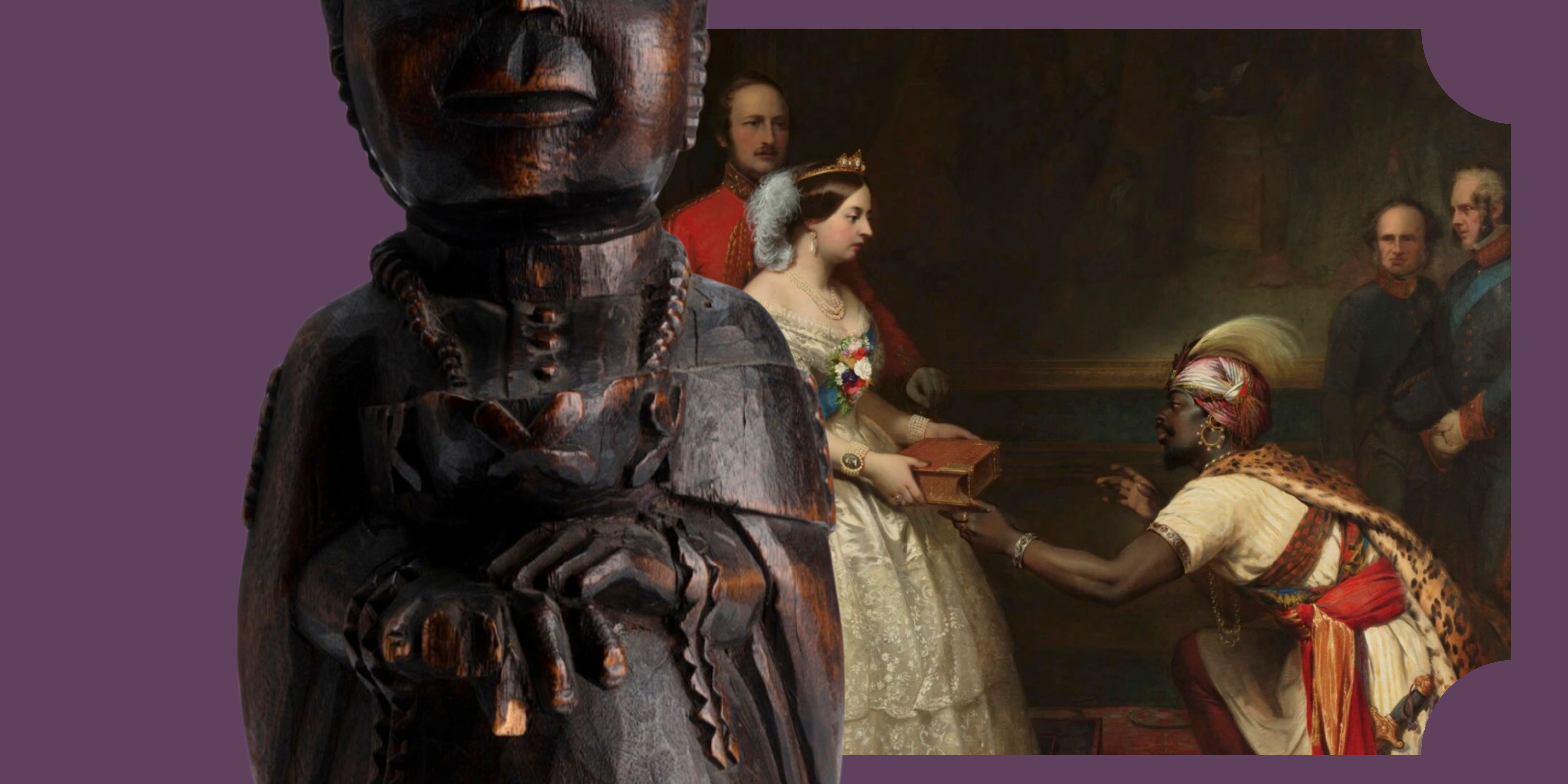
Reflections on Decolonial Art History Resource Development
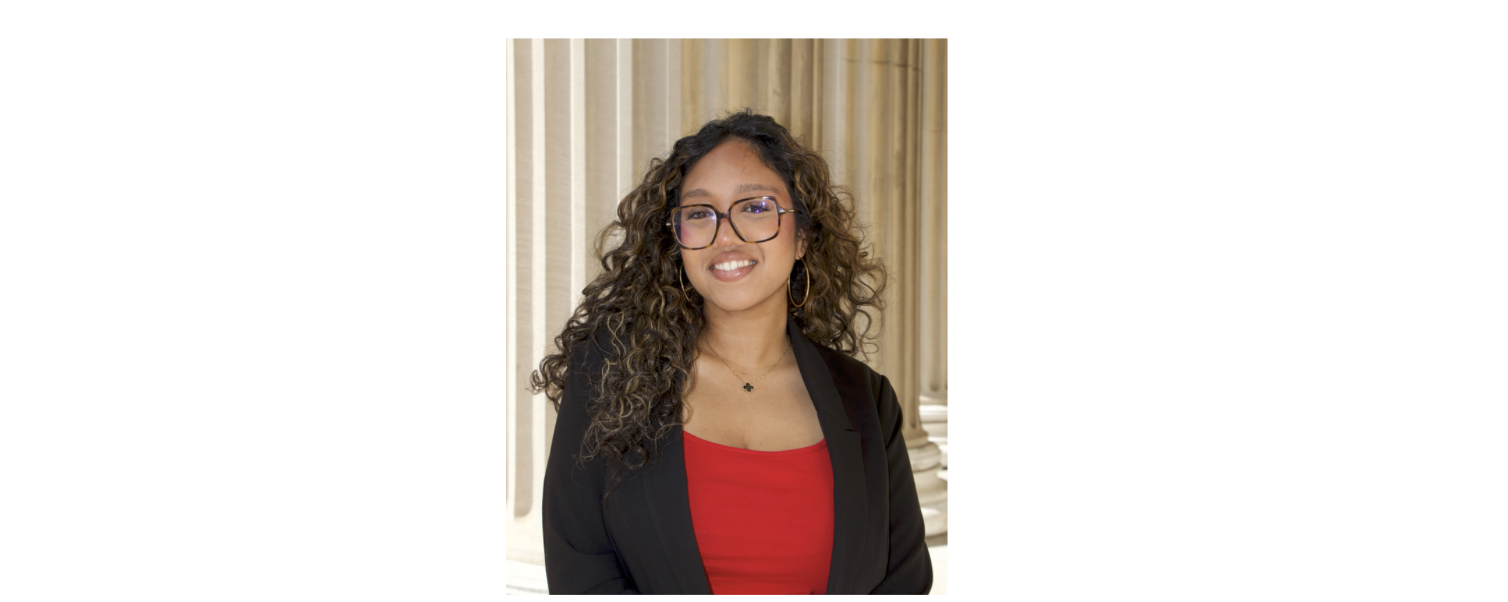
Wiann Wilson joined AHLU over the summer on an internship supported by the Laidlaw Scholars Leadership and Research Programme. Wiann’s first-year involved six weeks of sociology of gender and race research at Columbia University and she has now concluded her second-year six-week fellowship at Art History Link Up. AHLU is grateful to Wiann and to the Laidlaw Foundation for their support, read more about Wiann’s time with AHLU below.
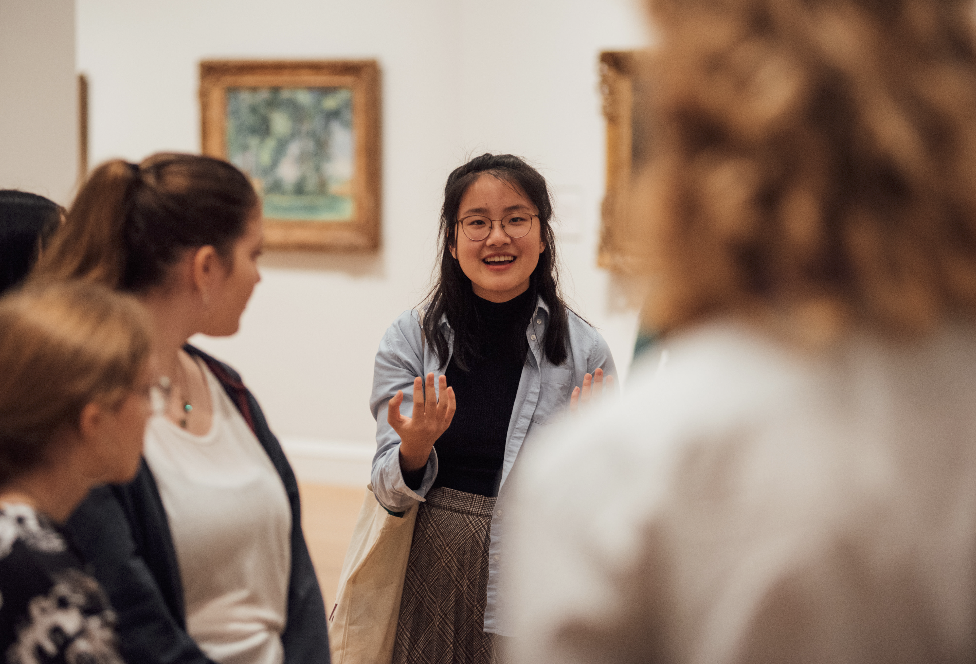
Observing “Gallery Time” sessions at The Courtauld while sitting in on AHLU classes, I realised that close looking is not so different from close reading. During these sessions, AHLU teaching staff take students into the Courtauld Gallery to teach them how to "close look" in real time. Both require patience, curiosity and the willingness to question what appears obvious. More importantly, both ask us to notice what has been overlooked. That became the guiding principle of my fellowship.
As a Literary Studies scholar, I have trained myself to read slowly and carefully, paying close attention to word choice, structure, and detail—a practice known as close reading. When selecting an organisation for the international placement component of my Laidlaw Foundation Fellowship, I was drawn to Art History Link-Up because I saw it as an opportunity to apply my training in textual analysis to a new discipline, while also bringing my background in decolonial studies to an organisation that had been working towards including that perspective more. I arrived expecting close reading to function primarily as a tool for interpreting artworks and their histories. Instead, I found that it shaped the methodology through which I could bring a decolonial perspective to developing educational resources.
As a rising third-year student at Columbia University in New York City studying Comparative Literature and the Study of Ethnicity & Race, I supported AHLU's mission to develop a more inclusive art history curriculum. Before creating resources, I immersed myself in the organisation's work: studying the specifications, reviewing teaching materials, observing classes at Somerset House, and speaking with AHLU staff to understand where new resources could have the greatest impact.
One idea consistently emerged: for teachers working within specifications, decolonial practice is less about replacing the curriculum than reading it differently. It means uncovering overlooked histories, questioning dominant narratives and bringing excluded perspectives into view. My training in literary studies shaped the questions I brought to this challenge. Rather than asking what should be removed, I asked what new questions could be brought to existing materials.
This perspective informed the two resource databases I developed. The first, for the Higher Project Qualification (a research-led project qualification typically taken by students in Key Stage 4), compiled pedagogical guidance, student resources, supplementary materials and lesson ideas that incorporated decolonial practices and Global Majority perspectives while remaining grounded in British historical contexts.
The second, designed for the Art History A Level and Extended Project Qualification (an independent research qualification for pre-university students), responded to a curriculum built around required artists and case studies. Instead of imagining an entirely new syllabus, I mirrored the research categories used in the HPQ database while adding a curated ‘Critical Texts’ section that equips students with decolonial interpretations of the prescribed works they encounter in both A Level Art History examinations.
Looking back, that has been the most valuable lesson of my time at AHLU. I arrived believing close reading belonged to literature. I leave understanding that it also belongs to curriculum design and art history education. Whether reading a novel, studying a painting or designing a lesson, the same question remains: whose stories have we been taught to see, and whose are we only just beginning to notice?
Wiann Wilson
Wiann Wilson is a rising third-year student at Columbia University in New York City, studying Comparative Literature and the study of Ethnicity & Race. She is a 2025 Laidlaw Scholar who researches how ideas of masculinity in Ghana transformed between the late colonial period and the rise of nationalism, with a focus on the rhetoric close reading of archival newspapers and political texts.
Related Articles

Art History is under threat
We believe art history should be for everyone, however fewer than 1% of state supported secondary schools offer Art History A Level. As a result, there is a lack of diversity in the arts sector and an increasing skills shortage. We are the only charity offering formal Art History teaching to school-aged students from all backgrounds. Your financial support will ensure that everyone has an opportunity to study art history: together we can transform the future of the arts.
