

Generosity and the Power of Play - Inside an AHLU Class
Last month I had the pleasure of joining students for an Art History Link-Up (AHLU) class, something I have been looking forward to since joining the team as Charity Administrator in December.
It’s hard to pin down where exactly AHLU’s magic comes from, but there were two specific qualities I found myself noticing again and again – generosity and play.
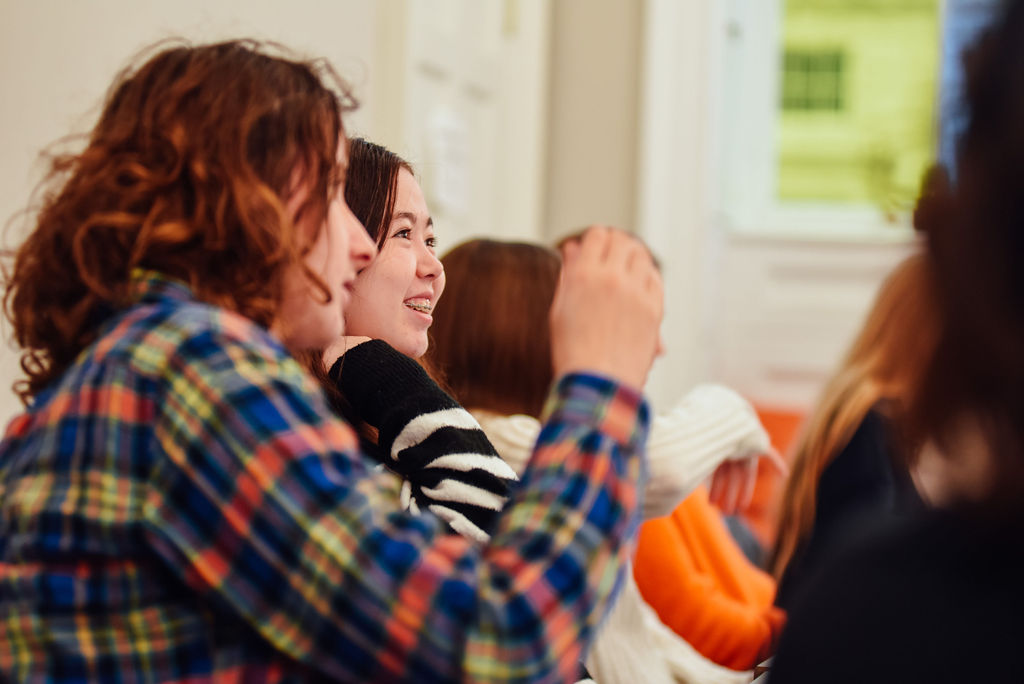
AHLU’s generosity isn’t in grand gestures, but in how we (both staff and students) can work together kindly and consistently - an invitation for collaboration and shared learning. Students erupted into enthusiastic conversations, sharing their emerging ideas, freely offering interpretations and building on each other’s thoughts to arrive at conclusions together. There is an unspoken understanding that every contribution is invaluable, creating safe spaces for new ways of thinking, describing and learning about art history. There was no sense of ownership of ideas, or possessiveness over them. They had been passed around, reshaped, and expanded. The process of learning was communal.
Generosity is built into the foundation of AHLU - in listening closely when someone else sees something completely different to you. Art history can sometimes feel like a rigid world reserved for the academics, but here generosity reminds us that every perspective adds something meaningful. From staff, who facilitate a low stakes and pressure-free environment through gentle questions, and from students who endlessly share and receive others’ interpretations with openness, they create a richer, more layered understanding of art.
This becomes especially powerful when we are learning alongside people who don’t come from traditional academic pathways. Students without ‘institutional’ academic backgrounds often bring fresh, unfiltered ways of seeing. They may notice details others overlook, connect artworks to lived experiences, or ask questions that shift conversations in unexpected and valuable directions. Sharing ideas across different experiences helps break down assumptions about who ‘belongs’ in art history. It also encourages clearer, more inclusive communication -moving away from inaccessible long-winded analyses and toward language that invites everyone in.
There’s a mutual benefit here. Those with more formal academic experience can learn to think more openly and creatively, while those newer to the subject gain confidence in recognising the value of their own insights. The result is a learning environment that feels less hierarchical and more collaborative - where knowledge is not simply delivered but built together.
Then there is play, perhaps the most underrated way to engage with art. Play invites curiosity. It encourages us to ask, “What if?” and “Why not?” instead of worrying about being right. Play can look like students creating fabulations, mimicking a pose from a sculpture, or drawing unexpected parallels. Students bring in contemporary contexts like memes, lived experiences and celebrity news, building up their ability to look critically, engage in intersectional thinking and recognise similarities across time periods. Through play, art becomes less distant and more alive - something we can interact with, question, endlessly reframe, and enjoy.
Together, generosity and play transform the experience of learning. They turn a classroom into a collaborative exploration, where everyone - regardless of background or experience - has something valuable to contribute. You don’t need prior knowledge to participate; you just need a willingness to engage, to wonder, and to share.
If you’re visiting an Art History Link-Up class or are in Y9 or Y10 wanting to join our new online programme, come as you are. Bring your curiosity. Offer your thoughts. Be open to surprise. When generosity and play lead, art isn’t just something we study - it’s something we experience together.
Hafsa Siddiqui, Charity Administrator, AHLU
Related Articles


Art History is under threat
We believe art history should be for everyone, however fewer than 1% of state supported secondary schools offer Art History A Level. As a result, there is a lack of diversity in the arts sector and an increasing skills shortage. We are the only charity offering formal Art History teaching to school-aged students from all backgrounds. Your financial support will ensure that everyone has an opportunity to study art history: together we can transform the future of the arts.
