


Seven Years at Art History Link-Up
When I first started working with Art History Link-Up aged 19 as an intern, it was my first teaching role, and I had nothing to compare it to. I took it as a given that, because the teachers were so naturally inspiring, and the students were so passionate about learning, I assumed that all workplaces must be like this. Back then, the classes were held in the magnificent lecture theatre in the Wallace Collection. The walls were lined with ornate frames, and the second half of the class took place in the Gallery itself. The students on the course, then as now, gave two and a bit hours of their Saturday for two years to achieve an A Level or EPQ (Extended Project Qualification) in Art History, at the Wallace Collection, National Gallery and then Courtauld.
Some students came for two years and didn't even take a qualification; they came because they loved the subject and the environment of the classes. All of this I very much took for granted. It was only by watching new colleagues come into the classroom and their amazement that I realised how lucky I had been with my first job.
So, in the spirit of not taking things for granted, here are some of my favourite parts of the last seven years working at Art History Link-Up:
In the pandemic, when everything else was shutting down, and young people were suffering arguably the most, Art History Link-Up ramped up. The classes went online and became a lifeline not only for the students but for the teachers as well. The class structure on Zoom, with its small breakout rooms and discursive learning style, allowed for a sense of community to emerge when we all needed it most. The teaching team really bonded as well, with the Zoom yoga groups and art-themed quizzes being a particular highlight.
After seven years of teaching with the charity, and hundreds of students later, they pop up everywhere. I was in Venice at the Peggy Guggenheim a few years ago, and one of my former students ran up to me. She was working there as part of their internship programme. This has been a continual joy of the work, seeing the impressive pathways that the students I have worked with are on, many in the arts, but one recently completed a PhD in Marine Biology!
I started at AHLU as an intern and became a teaching assistant and then a teacher until finally becoming the Education and Outreach Officer for the charity. I learnt to teach by watching my colleagues. I am so grateful to all of them for modelling such excellent teaching and being so generous with their time and experience.
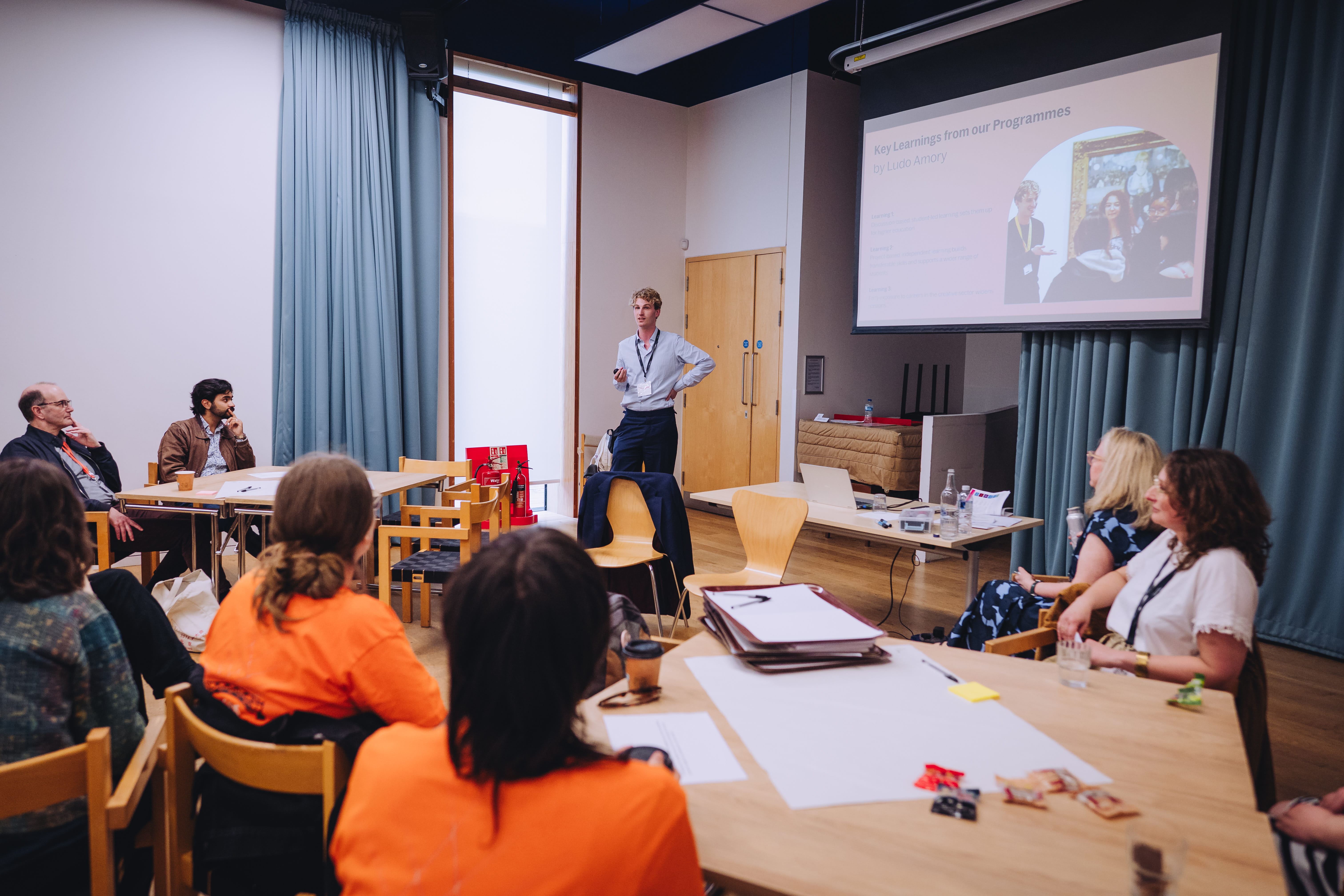
It has been seven years since I was sitting on a bench in the front hall of the Wallace Collection, waiting to meet my first set of students, and what an incredible seven years it has been! As I take up my new role as a Learning Producer at the National Army Museum, I want to thank colleagues, students and stakeholders for setting me on such an inspiring pathway.
Ludo Amory
Ludo Amory joined Art History Link-Up as a nineteen-year-old intern and leaves, almost seven years later, having taught and inspired hundreds of students across our programmes. Ludo's warmth towards and care for our students has been a constant throughout, and we are especially proud that over twenty of our alumni have been inspired to follow in his footsteps to study History of Art at the University of Cambridge, where Ludo himself studied. We wish Ludo every success in his new role as Learning Producer at the National Army Museum and are delighted that he will continue to teach and work with AHLU on a freelance basis.
Rose Aidin, Founder and Chief Executive, AHLU
Related Articles

Art History is under threat
We believe art history should be for everyone, however fewer than 1% of state supported secondary schools offer Art History A Level. As a result, there is a lack of diversity in the arts sector and an increasing skills shortage. We are the only charity offering formal Art History teaching to school-aged students from all backgrounds. Your financial support will ensure that everyone has an opportunity to study art history: together we can transform the future of the arts.
